
 EN
EN DE
DE IT
IT FR
FR ES
ES RU
RU JP
JP RO
RO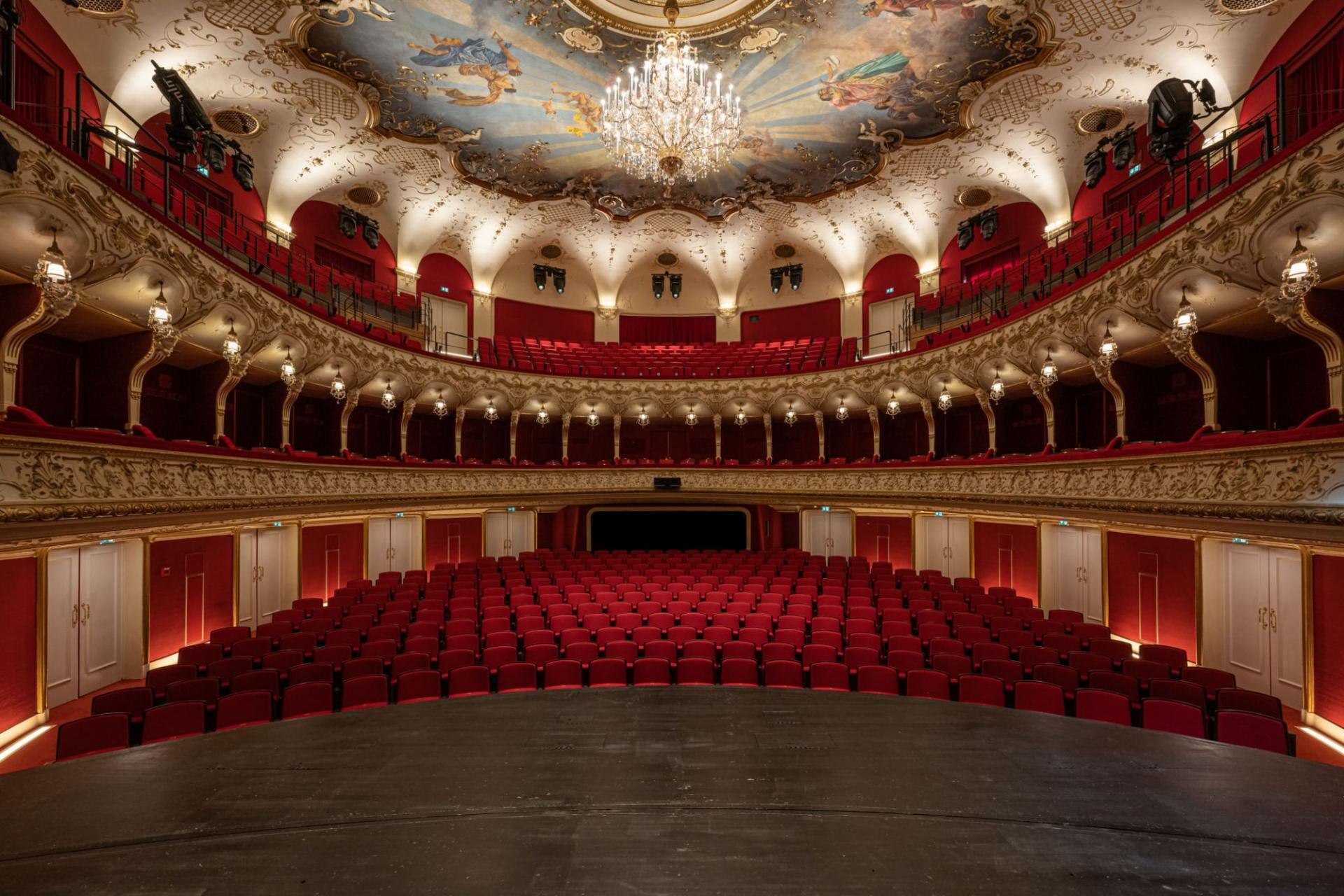
© Martina Weiss
De profundis
Order tickets
July 2026 | ||||||
|---|---|---|---|---|---|---|
Mo | Tu | We | Th | Fr | Sa | Su |
De profundis
Adapted by Oliver Reese
Translated by Mirko Bonné
Guest performance
‘When one has weighed the sun in the balance, and measured the steps of the moon, and mapped out the seven heavens star by star, there still remains oneself. Who can calculate the orbit of his own soul?‘
The actor and Iffland Ring holder Jens Harzer, who will appear in the world premiere of Peter Handke’s Schnee von gestern, Schnee von morgen (Snows of Yesteryear, Snows of Tomorrow), made his debut at the Berliner Ensemble in autumn 2025 with De Profundis. Together with director Oliver Reese, Harzer developed a monologue that plunges the audience into the depths of Oscar Wilde’s life – a powerfully eloquent attempt to reclaim life through art.
In 1895, Oscar Wilde was sentenced to two years in prison: for provoking society, for flouting its conventions, for loving men openly and refusing to hide in the shadows. His trial was meant to serve as a lesson – less a punishment for a crime than a judgement on his very way of being, on his fierce craving for freedom and acceptance. His long letter from prison to Lord Alfred ‘Bosie’ Douglas, later published under the title ‘De Profundis‘, is the final outcry of a broken but unbowed spirit: the testimony of a man who has spent his life testing the limits of respectability and, in the end, lost everything. With extraordinary literary mastery, Wilde writes of contempt and loneliness, of pride and pain – and of a society that cannot tolerate what it cannot understand.
Program and cast
Cast
Jens Harzer
Creative Team
Oliver Reese: Director
Hansjörg Hartung: Sets
Elina Schnizler: Costumes
Jörg Gollasch: Music
Steffen Heinke: Lighting
Johannes Nölting: Dramaturgy
A Berliner Ensemble production
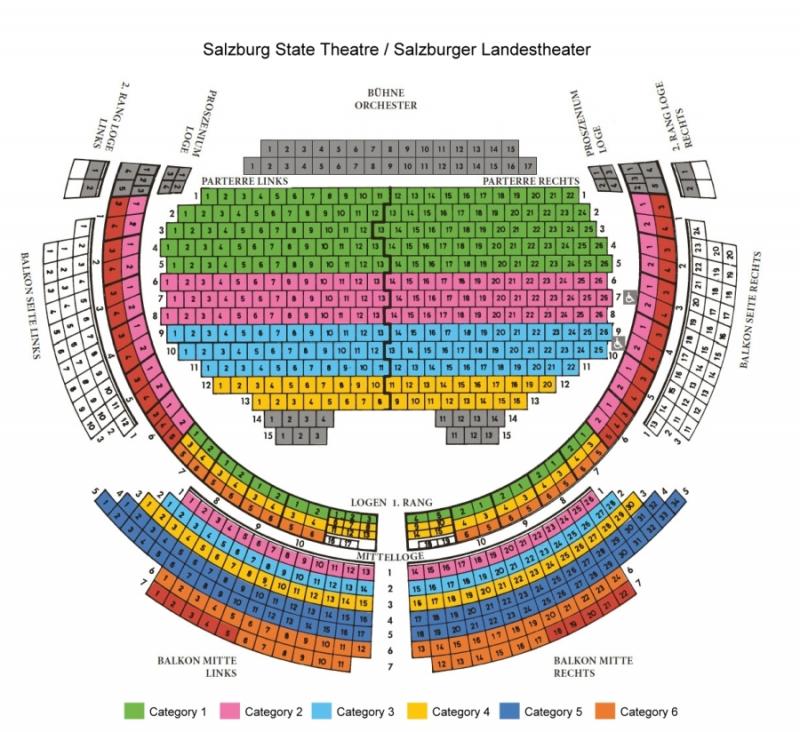
Salzburg State Theatre
The Salzburg State Theatre can look back on a very varied history which directly reflects the political and socio-cultural changes in the life of Salzburg: at the end of the 18th century the former Lodron Ball Room became the “Court Theatre”; in 1880 it was known as the Imperial and Royal National Theatre. After a new theatre was built in 1893 it was known as the City Theatre and following further conversions and renovation work (financed by the regional authorities) it has been known as the Landestheater since 1939/40. In 1856 a secular Mozart Festival was held in Salzburg when Don Giovanni was performed. Towards the end of the 19th century, music festivals were held when several Mozart operas were performed in the Landestheater. These festivities can be regarded as the immediate precursors of the Salzburg Festival.
It is probably more than mere chance that Max Reinhardt entered his first engagement at the age of twenty in Salzburg. He appeared in the opening performance celebrating the new theatre building in 1893 (according to plans by the architects Fellner & Helmer, who as early as 1890 presented an outline plan for a Mozart Festival Hall on the Mönchsberg, which, however, was never realised). From 1922 until the relevant adaptation of the Festival House (1927) all opera performances at the festival were given in the Stadttheater. These were mainly guest productions from the Vienna State Opera which were intended to ensure a scenic alternative programme to Max Reinhardt’s drama productions. Since the time when the festival halls were completed in the old town centre of Salzburg the Landestheater has be-come an important venue for productions of plays, including many world premieres.
Related events