
 EN
EN DE
DE IT
IT FR
FR ES
ES RU
RU JP
JP RO
RO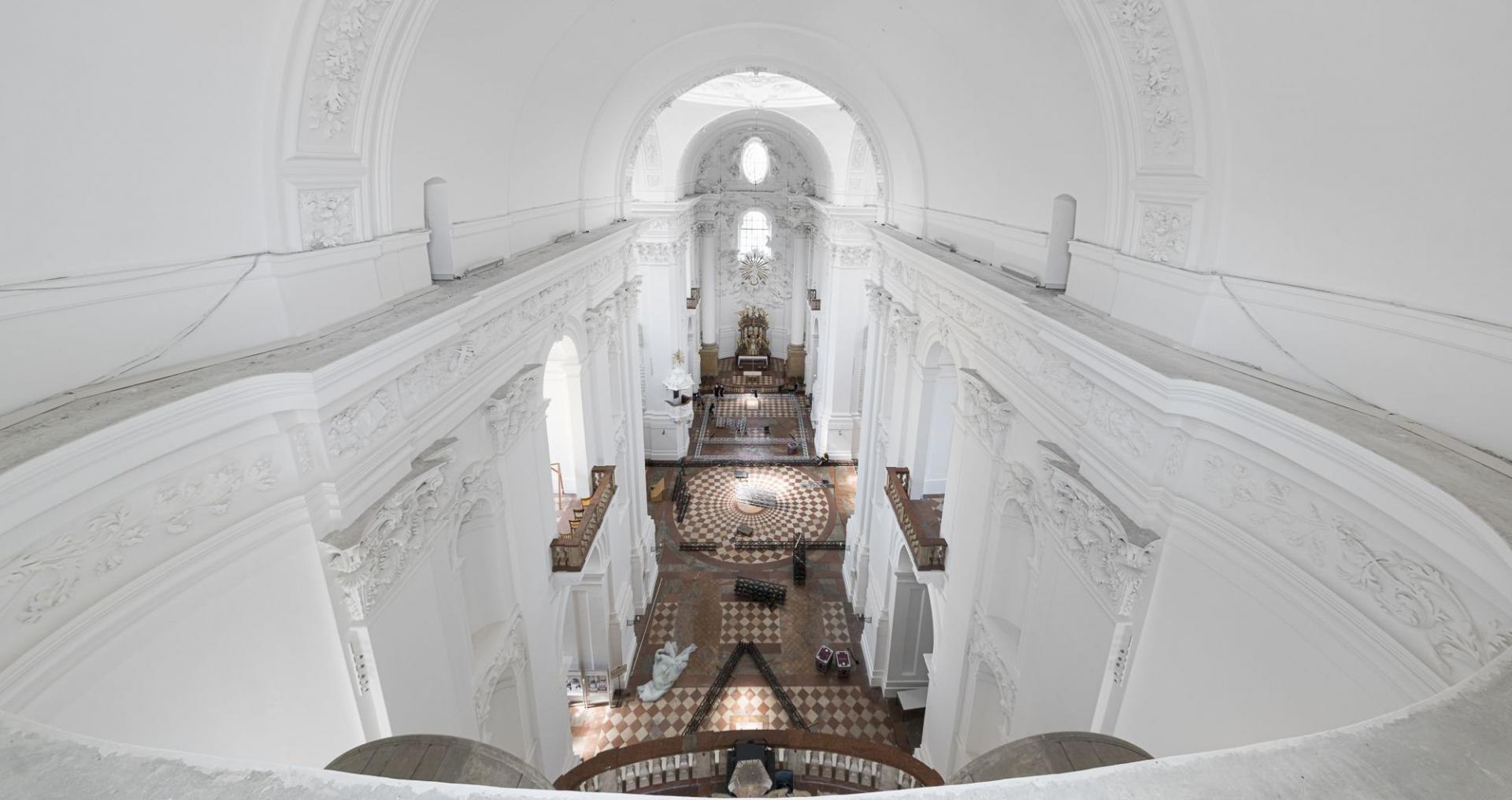
© Werner Kmetitsch
Passion
Order tickets
 February 2028 February 2028 | ||||||
|---|---|---|---|---|---|---|
Mo | Tu | We | Th | Fr | Sa | Su |
Passion – Pascal Dusapin (1955) | Opera – Concert Performance
Opera (composed 2006–2007, premiered 2008)
Libretto by Pascal Dusapin and Rita de Letteriis
In Italian with German and English surtitles
“Speak to me! I look at you, oh my sun, and I do not recognize you.”
Simply She and He – “Lei” and “Lui” – Pascal Dusapin called the two solo roles in his opera Passion, yet the figures of Orpheus and Eurydice shimmer through them like a distant memory. Questions that preoccupied the composer during the conception of his sixth music-theatre work – for example, whether Orpheus consciously looks back at Eurydice upon returning from the underworld because he realizes how much her disappearance and his grief over the loss inspire him as an artist – are reflected in significant changes to the myth: In Dusapin’s version, the woman, unlike Eurydice, is not sacrificed, as she refuses to follow the man; and he also will not return to the world of the living.
The opera, premiered in 2008, unfolds as a dialogue between a couple oscillating between reconciliation and alienation. Dusapin titled the ten interconnected sections – as well as the work as a whole – “Passion.” For a long time, he had entertained the idea of a project whose central theme would be the musical expression of “passions,” of the “soul’s emotions.” When in 2005 he received a commission from the Festival d’Aix-en-Provence for a stage work that would engage with the three surviving operas of Claudio Monteverdi, he immediately thought of the immense significance that the expression of affects and emotions had for this pioneer of opera. He therefore decided to combine the commission with his Passion project.
Thus, Lei and Lui exist in an uninterrupted flow of shifting emotional states: “The passions,” Dusapin says, “overlap, collide, and divide into a multitude of paths marked by fear, joy, pain, terror, desire, delight, grief, love, and anger.” In his score, Dusapin subtly references Monteverdi and the Baroque, yet creates a sound world entirely his own: music of calm, intense tension, hypnotic power, and austere beauty.
Christian Arseni
Program and cast
Franck Ollu – Musical Direction
Cast
Sarah Aristidou – Lei
Georg Nigl – Lui
Schola Heidelberg – The Others
Ensembles
Ensemble Modern
Ekkehard Windrich – Vocal Ensemble Preparation
Thierry Coduys – Sound Direction
Collegiate Church

© Werner Kmetitsch
Related events