Schnee von gestern, Schnee von morgen
‘What good fortune you’ve had in this life — and what greater fortune still awaits you in the next!‘
How can one talk about the world without trying to explain it? Without wanting to possess it? How can one speak about the self without defining it? What does memory sound like? And what is the point of this life anyway?
Peter Handke has always charted the world anew – through language, and in defiance of its dulling. In his latest text, he remains true to this poetic inquiry – possibly more radical, more tender than ever, yet still with that subtle humour and quiet self-irony through which he so coolly undercuts his own seriousness. Could it all be merely water under the bridge, neiges d’antan, the snows of yesteryear? And what if it is?
A person on the move – not a sharply drawn character, but a wanderer, one who moves crisscross through inner and outer landscapes, at times feeling his way, at times leaping forward. It might be an act of self-examination, or maybe a kind of farewell melody – a quiet laugh that hints at something beneath the surface. ‘Or then again, perhaps not.’ As he walks, he gathers what comes his way. From these fragments emerges a magical tableau of observation – one that resists any notion of a greater whole, and yet, through that very resistance, reveals it: from the depths of the individual, from their relentless subjectivity. ‘Or then again, perhaps not.’ – A turn of phrase with which the author time and again throws us back upon ourselves and our own perception. Handke dances with language, plays with himself and with us, challenges his audience, strings together proverbs, theatrical lines, nonsense sayings, free associations and musings. He puts himself and us on trial, allows for digression, silliness, wonder – and loses himself, quite deliberately, in a space that knows neither beginning nor end, only movement. Until the one who has been speaking incessantly steps aside, moves on, disappears – and another takes his place: ‘Supposedly he was seen some time ago, cowering as the last passenger on the very last night bus.’
Peter Handke, born in Carinthia in 1942, was awarded the Nobel Prize in Literature in 2019. But the debates around his work began long before that: questions about where the responsibility of literature lies, and about the fraught ties between art and reality. These questions have always been woven into the meandering explorations within Handke’s extraordinary texts, which are at once poetic and provocative. His prolific output includes novels, plays, short stories, essays, screenplays, translations and poetry. He broke the mould of theatre with his now-iconic dramatic debut Publikumsbeschimpfung (Offending the Audience, 1966) and with later works such as Die Stunde da wir nichts voneinander wußten (The Hour We Knew Nothing of Each Other, 1992), a play that unfolds without a single spoken word throughout. For his dramatic epic Immer noch Sturm (Storm Still), which premiered at the Salzburg Festival in 2011, Handke found in actor Jens Harzer not only a passionate interpreter, but also an artist uniquely attuned to the lyricism of his language on stage. At Peter Handke’s express wish, Schnee von gestern, Schnee von morgen (Snows of Yesteryear, Snows of Tomorrow) will have its world premiere in Salzburg – a city with which he shares a deep connection. The production is directed by Jossi Wieler, the award-winning theatre and opera director renowned for his finely crafted, sensitive stagings, marking his eighth production for the Salzburg Festival. Together with Jens Harzer and Marina Galic – both members of the Berliner Ensemble – he now turns to Handke’s latest text, which the author’s publisher describes as ‘a piece for the stage‘, ‘a song without a refrain.’ A work, then, not merely to be read, but one that demands to be performed. A musical text – a meditation on the theatrical power of storytelling itself, on questioning and endurance, and on the elation felt in the very instant of vanishing. ‘What good fortune you’ve had in this life – and what greater fortune still awaits you in the next!’
Sibylle Baschung
 en
en 
 de
de it
it fr
fr es
es ru
ru jp
jp ro
ro







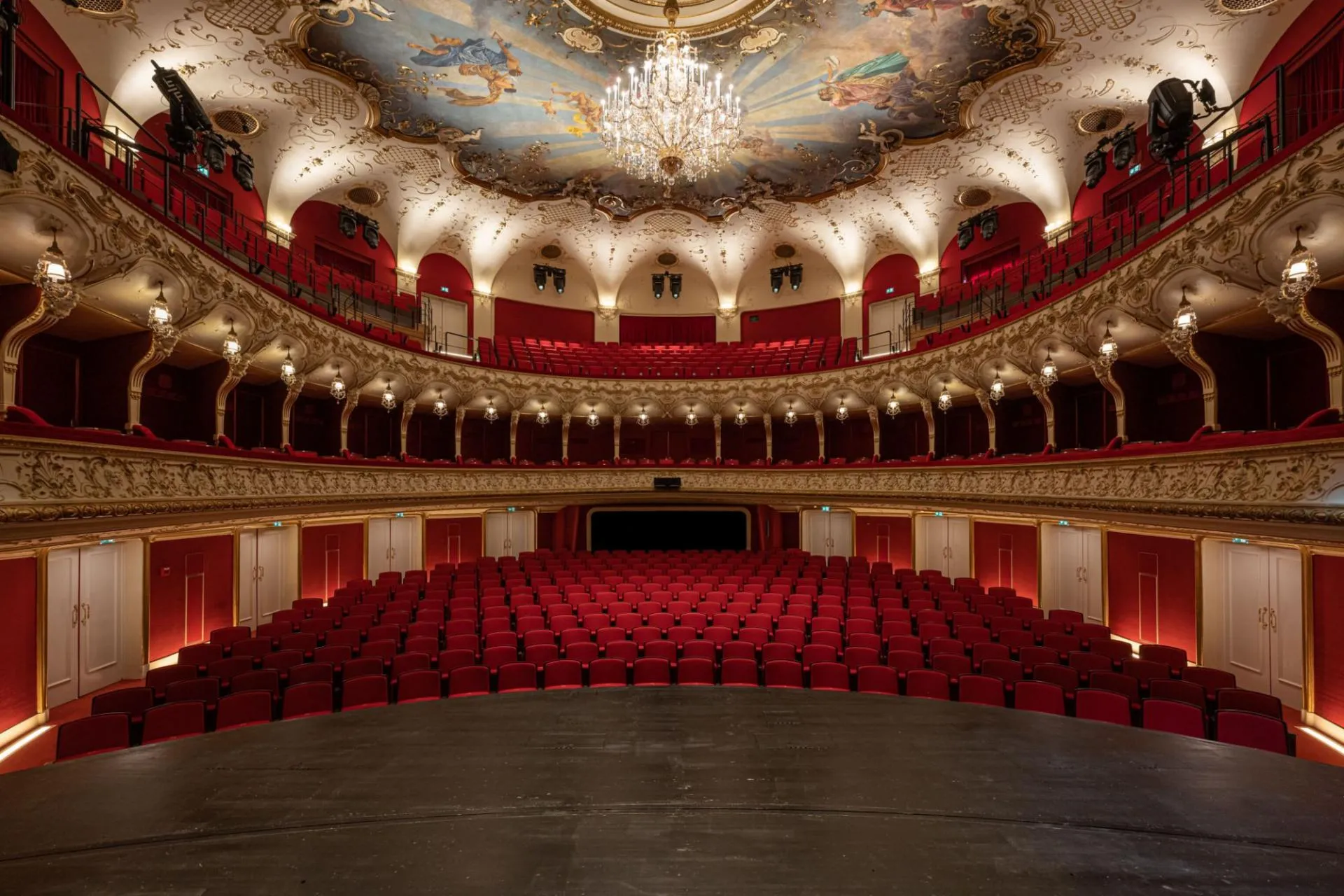
 Salzburg State Theatre
 Mon 27 Jul 2026 - Wed 05 Aug 2026


 RM EUROPA TICKET GmbH
 Call now
 Book now