
 EN
EN DE
DE IT
IT FR
FR ES
ES RU
RU JP
JP RO
RO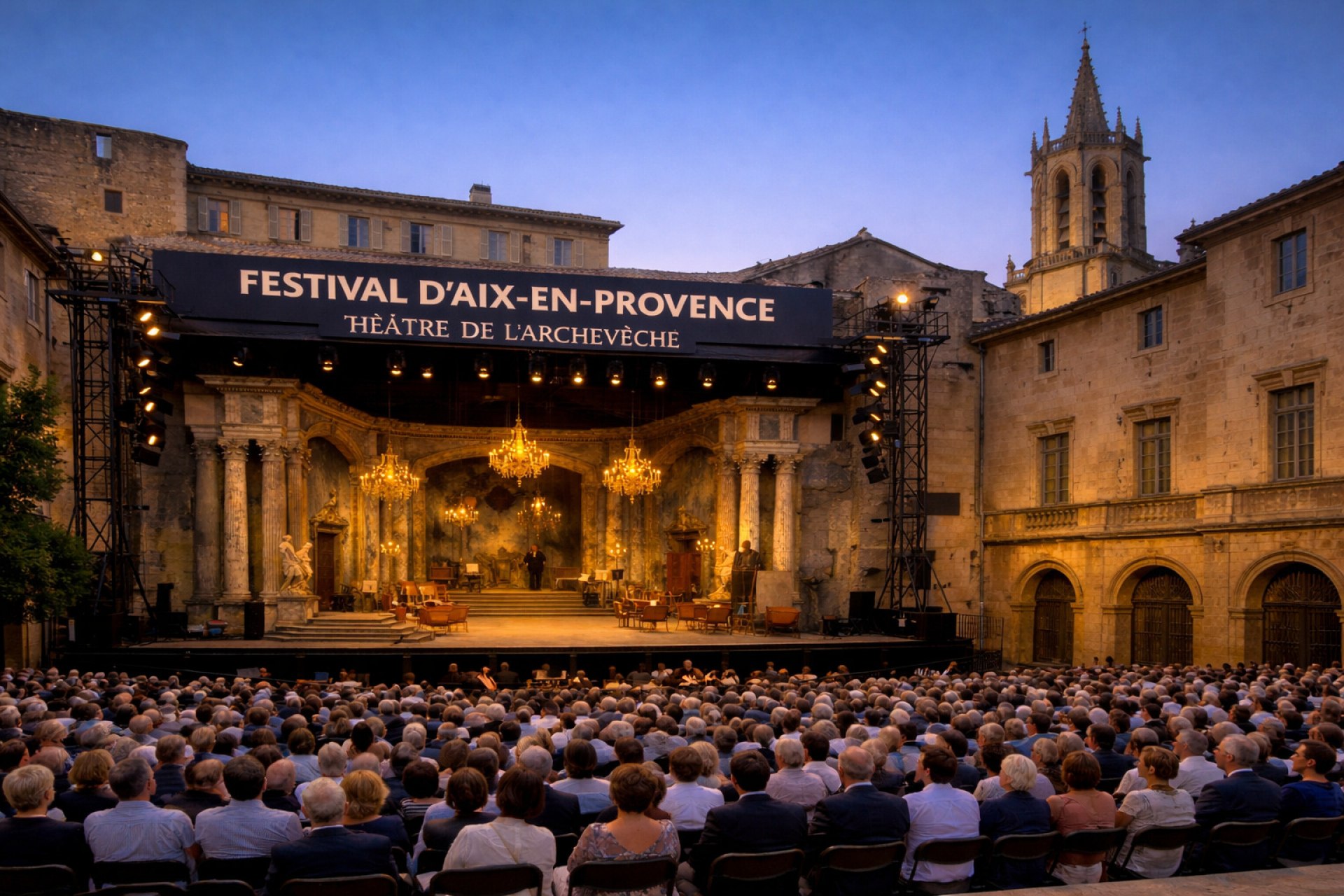
The Magic Flute
Order tickets
 December 2028 December 2028 | ||||||
|---|---|---|---|---|---|---|
Mo | Tu | We | Th | Fr | Sa | Su |
The Magic Flute — Wolfgang Amadeus Mozart (1756–1791)
New Production Of The Festival D’aix-en-provence
A Coproduction With Les Théâtres De La Ville De Luxembourg, Opera Ballet Vlaanderen
Through myriad states of rapture and mystery, a couple makes its way from darkness to light, bearing a new ideal for human society. Mozart’s favourite work, whose popular success he was able to witness until his dying hours, is a miraculous aesthetic and spiritual achievement: its complex simplicity, with its unique diversity of tones and languages, makes it a universal masterpiece in its own right, somewhere between fairy-tale entertainment and noble initiation. But any bright utopia invariably has a dark side when it assumes concrete form in the West of yesterday or today; when a certain vision of the perfect community enters history. Digging into the sensitive archives of our collective memory, Clément Cogitore invites us to follow the bildungsroman of young children as they grow up in a world of fragile beauty and uncertain truth. For the first time at the Festival, Leonardo García-Alarcón and Cappella Mediterranea are taking on a work by its flagship composer, performed by a cast that is every bit as magical as the occasion requires.
Synopsis
The overture, composed after the other parts of the opera were complete, begins with a solemn three-chord sequence from the brass, associated with the Priests of the Temple of Wisdom. (The number three is highly significant in Freemasonry and recurs as the number of ladies, boys and temples.) It transitions in an adagio to a lively fugue in E-flat major. Halfway through, there is a false ending. After another three-chord brass sequence, the fugue resumes in E-flat minor, returning to E-flat major.
Act 1
Scene 1: A rough, rocky landscape
Tamino, a handsome prince lost in a distant land, is pursued by a serpent and asks the gods to save him (aria: "Zu Hilfe! Zu Hilfe!" / Help! Help!, segued into trio "Stirb, Ungeheuer, durch uns're Macht!" / Die, monster, by our might!). He faints, and three ladies, attendants of the Queen of the Night, appear and kill the serpent. They find the unconscious prince extremely attractive, and each of them tries to persuade the other two to leave her alone with him. After arguing, they reluctantly decide to leave together.
Tamino wakes up and is surprised to find himself still alive and the serpent dead. Papageno enters dressed as a bird. He describes his life as a bird-catcher, complaining he has no wife or girlfriend (aria: "Der Vogelfänger bin ich ja" / The birdcatcher am I indeed). Tamino introduces himself to Papageno, thinking Papageno killed the serpent. Papageno happily takes the credit – claiming he strangled it with his bare hands. The three ladies suddenly reappear and instead of giving Papageno wine, cake and figs, they give him water and a stone, and padlock his mouth closed as a warning not to lie. They give Tamino a portrait of the Queen of the Night's daughter Pamina, with whom Tamino falls instantly in love (aria: "Dies Bildnis ist bezaubernd schön" / This portrait is enchantingly beautiful).
The ladies return and tell Tamino that Pamina has been captured by Sarastro, whom they describe as a powerful, evil demon. Tamino vows to rescue Pamina. The Queen of the Night appears and promises Tamino that Pamina will be his if he rescues her from Sarastro (Recitative: "O zittre nicht, mein lieber Sohn" / Oh, tremble not, my dear son! – and aria: "Du, Du, Du wirst sie zu befreien gehen / You will go to free her). The Queen and the ladies leave and Papageno can only hum to bemoan the padlock on his mouth. (Quintet: "Hm! Hm! Hm! Hm!"). The ladies return and remove the padlock with a warning not to lie any more. They give Tamino a magic flute which has the power to change sorrow into joy, and Papageno magic bells for protection, telling him to go with Tamino. The ladies tell of three boys who will guide Tamino and Papageno to Sarastro's temple. Together Tamino and Papageno set forth.
Scene 2: A room in Sarastro's palace
Pamina is dragged in by Sarastro's slaves, having tried to escape. Monostatos, a blackamoor and chief of the slaves, orders them to chain her and leave her alone with him. Papageno, sent ahead by Tamino to help find Pamina, enters (Trio: "Du feines Täubchen, nur herein!" / Just come in, you fine little dove!). Monostatos and Papageno are each terrified by the other's strange appearance and both flee, each thinking the other is the devil. Papageno returns and announces to Pamina that her mother has sent Tamino to save her. Pamina rejoices to hear that Tamino is in love with her. She offers sympathy and hope to Papageno, who longs for a wife. Together they reflect on the joys and sacred value of marital love (duet: "Bei Männern welche Liebe fühlen" / In men, who feel love).
Finale. Scene 3: A grove in front of a temple
The three boys lead Tamino to Sarastro's temple, promising that if he remains patient, wise and steadfast, he will succeed in rescuing Pamina (Quartet: "Zum Ziele führt dich diese Bahn" / This path leads you to your goal). Tamino approaches the right-hand entrance (the Temple of Reason) and is denied access by voices from within. The same happens when he goes to the entrance on the left (the Temple of Nature). But from the entrance in the middle (the Temple of Wisdom), a senior priest appears. (The priest is referred to as "The Speaker" in the libretto, but his role is sung.) He tells Tamino that Sarastro is benevolent, not evil, and that he should not trust the Queen of the Night. With a hidden male chorus, he promises that Tamino's confusion will be lifted when he approaches the temple in a spirit of friendship, and that Pamina is alive. Tamino plays his magic flute. Animals appear and dance, enraptured, to his music. Tamino hears Papageno's pipes sounding offstage, and hurries off to find him (aria: "Wie stark ist nicht dein Zauberton" / How strong is thy magic tone).
Papageno and Pamina enter, searching for Tamino (trio: "Schnelle Füße, rascher Mut" / Swift steps, ready courage). They are recaptured by Monostatos and his slaves. Papageno plays his magic bells, causing Monostatos and his slaves to dance off the stage, mesmerised by the beauty of the music (chorus: "Das klinget so herrlich" / That sounds so splendid). Papageno and Pamina hear the sound of Sarastro's retinue approaching. Papageno is frightened and asks Pamina what they should say. She answers that they must tell the truth. Sarastro enters, with a crowd of followers. (chorus: "Es lebe Sarastro!" / Long live Sarastro!) Pamina falls at Sarastro's feet and confesses that she tried to escape because Monostatos had forced his attentions on her. Sarastro receives her kindly and assures her that he wishes only for her happiness, but he refuses to return her to her mother, whom he describes as a proud, headstrong woman, and a bad influence on those around her. Pamina, he says, must be guided by a man.
Monostatos brings in Tamino. The two lovers see one another for the first time and embrace, causing indignation among Sarastro's followers. Monostatos tells Sarastro that he caught Papageno and Pamina trying to escape, and demands a reward. Sarastro ironically "rewards" Monostatos with a beating and sends him away. He announces that Tamino and Pamina must both undergo trials to be purified. The priests declare that virtue and righteousness will sanctify life and make mortals like gods ("Wenn Tugend und Gerechtigkeit" / If virtue and justice).
Act 2
Scene 1: A grove of palms
The council of priests of Isis and Osiris, headed by Sarastro, enters to the sound of a solemn march. Sarastro tells the priests that Tamino is ready to undergo the ordeals that will lead to enlightenment. He invokes the gods Isis and Osiris, asking them to protect Tamino and Pamina (Aria and chorus: "O Isis und Osiris / O Isis and Osiris").
Scene 2: The courtyard of the Temple of Ordeal
Tamino and Papageno are led in by two priests for the first trial. The two priests advise Tamino and Papageno of the dangers ahead of them, warn them of women's wiles and swear them to silence (Duet: "Bewahret euch von Weibertücken" / Keep yourselves from women's tricks). The three ladies appear and remind Tamino and Papageno of what the Queen has said about Sarastro, trying to tempt them into speaking. (Quintet: "Wie, wie, wie" / How, how, how) Papageno cannot resist answering the ladies, but Tamino remains aloof, angrily instructing Papageno not to listen to the ladies' threats and to keep quiet. Seeing that Tamino will not speak to them, the ladies withdraw in confusion. The Speaker and a priest return and lead Tamino and Papageno away.
Scene 3: A garden
Pamina is asleep. Monostatos creeps in and ogles her. (Aria: "Alles fühlt der Liebe Freuden" / All feel the joys of love) He is about to kiss her, when the Queen of the Night appears. Monostatos hides. Waking, Pamina tells her that Tamino is joining Sarastro's brotherhood and that she is thinking of accompanying him. The Queen is not pleased. She explains that her husband, the previous owner of the temple, on his deathbed gave the ownership to Sarastro instead of to her, rendering the Queen powerless (this is in the original libretto, but is usually omitted from modern productions). She gives Pamina a dagger, ordering her to kill Sarastro with it and threatening to disown her if she does not. (Aria: "Der Hölle Rache kocht in meinem Herzen" / Hell's vengeance boils in my heart). She leaves. Monostatos returns and tries to force Pamina's love by threatening to reveal the Queen's plot, but Sarastro enters and drives him off. Pamina begs Sarastro to forgive her mother and he reassures her that revenge and cruelty have no place in his domain (Aria: "In diesen heil'gen Hallen" / Within these sacred halls).
Scene 4: A hall in the Temple of Ordeal
Tamino and Papageno are led in by priests, who remind them that they must remain silent. Papageno complains of thirst. An old woman enters and offers Papageno a cup of water. He drinks and teasingly asks whether she has a boyfriend. She replies that she does and that his name is Papageno. She disappears as Papageno asks for her name, and the three boys bring in food, the magic flute, and the bells, sent from Sarastro (Trio: "Seid uns zum zweiten Mal willkommen" / We welcome you a second time). Tamino begins to play the flute, which summons Pamina. She tries to speak with him, but Tamino, bound by his vow of silence, cannot answer her, and Pamina begins to believe that he no longer loves her. (Aria: "Ach, ich fühl's, es ist verschwunden" / Oh, I feel it, it is gone) She leaves in despair.
Scene 5: The pyramids
The priests celebrate Tamino's successes so far, and pray that he will succeed and become worthy of their order (Chorus: "O Isis und Osiris" / O Isis and Osiris). Pamina is brought in and Sarastro instructs Pamina and Tamino to bid each other farewell before the greater trials ahead, alarming them by describing it as their "final farewell". (Trio: Sarastro, Pamina, Tamino – "Soll ich dich, Teurer, nicht mehr sehn?" / Shall I see you no more, dear one? — Note: In order to preserve the continuity of Pamina's suicidal feelings, this trio is sometimes performed earlier in act 2, preceding or immediately following the chorus "O Isis und Osiris".[f][17]) They exit and Papageno enters. The priests grant his request for a glass of wine and he expresses his desire for a wife. (Aria: "Ein Mädchen oder Weibchen" / A girl or a woman). The elderly woman reappears and warns him that unless he immediately promises to marry her, he will be imprisoned forever. When Papageno promises to love her faithfully (muttering that he will only do this until something better comes along), she is transformed into the young and pretty Papagena. Papageno rushes to embrace her, but the priests drive him back, telling him that he is not yet worthy of her.
Finale. Scene 6: A garden
The three boys hail the dawn. They observe Pamina, who is contemplating suicide because she believes Tamino has abandoned her. The boys restrain her and reassure her of Tamino's love. (Quartet: "Bald prangt, den Morgen zu verkünden" / To herald the morning, soon will shine). The scene changes without a break, leading into scene 7.
Scene 7: At the Mountains of Ordeal
(One mountain has a waterfall, the other emits fire.) Two men in armor lead Tamino in. They promise enlightenment to those who successfully overcome the fear of death ("Der, welcher wandert diese Strasse voll Beschwerden" / He who walks this path weighed down with cares – sung to a Baroque chorale prelude, inspired by Martin Luther's hymn "Ach Gott, vom Himmel sieh darein" / Oh God, look down from heaven[g][19]). Tamino declares that he is ready to be tested. Pamina calls to him from offstage. The men in armour assure him that the trial by silence is over and he is free to speak with her. Pamina enters and declares her intention to undergo the remaining trials with him. She hands him the magic flute to help them through the trials ("Tamino mein, o welch ein Glück! / Oh, what luck, my Tamino!"). Protected by the music of the magic flute, they pass unscathed through fire and water. Offstage, the priests hail their triumph and invite the couple to enter the temple. The scene changes without a break, leading into scene 8.
Scene 8: A garden with a tree
Papageno despairs at having lost Papagena and decides to hang himself (Aria/Quartet: "Papagena! Papagena! Papagena! Weibchen, Täubchen, meine Schöne" / Papagena! Papagena! Papagena! Dear woman, dear dove, my beauty) He hesitates, counting to three, but more and more slowly. The three boys appear and stop him. They remind him he can play his magic bells to summon Papagena. She appears and, united, the happy couple stutter in astonishment and make bird-like courting sounds at each other. They plan their future and dream of the many children they will have together (Duet: "Pa-Pa-Pa-Papageno").[h] The scenes change without a break, leading into scene 9.
Scene 9: A rocky landscape outside the temple; night
Monostatos appears with the Queen of the Night and her three ladies. They plot to destroy the temple ("Nur stille, stille" / Just quiet, quiet) and the Queen confirms her promise to give Pamina to Monostatos, but suddenly, with thunder and lightning, they are cast out into eternal night. The scene changes without a break, leading into scene 10.
Scene 10: The Temple of the Sun
Sarastro announces the sun's triumph over the night and the fraudulent power of hypocrites. The chorus hails the newly consecrated Tamino and Pamina, and gives thanks to Isis and Osiris.
Program and cast
Conductor: Leonardo García-Alarcón
Stage direction and Video: Clément Cogitore
Set design: Alban Ho Van
Costume design: Wojciech Dziedzic
Lighting design: Sylvain Verdet
Choreography: Evelin Facchini
Dramaturgy: Simon Hatab
Pamina: Ying Fang*
Tamino: Mauro Peter
Die Königin der Nacht: Sabine Devieilhe*
Papageno: Sean Michael Plumb*
Sarastro: Brindley Sherratt
Der Sprecher: Edwin Crossley-Mercer*
Erste Dame: Alix Le Saux
Zweite Dame: Ashley Dixon
Dritte Dame: Adriana Bignagni Lesca
Papagena: Emma Fekete
Monostatos: Rodolphe Briand
Erster Priester, Zweiter geharnischter Mann: Damien Pass*
Zweiter Priester, Erster geharnischter Mann: Jonghyun Park*
Choir: Chœur de Chambre de Namur
Children’s Choir: Knabenchor der Chorakademie Dortmund
Orchestra: Cappella Mediterranea
*Former artists of the Académie
Theater of the Archbishop
With its grand staircase, medieval arches and 17th century wings enclosing an almost square space, the courtyard of the former archbishop’s palace in Aix is a jewel in the architectural crown of Aix-en-Provence and one of the locations that most memorably evokes the past of its historic centre. It was made into a theatre in 1948 and is now the venue most closely associated with the Festival.
It was last refurbished in 1998, when the facades were restored and work was undertaken to create a special relationship between stage and audience. Every summer, the Théâtre de l’Archevêché exudes a magical atmosphere, which François Mauriac described as reminiscent of “Don Juan among the stars”.


Related events